
Define the Food Before Choosing The Relative Pet Pouch
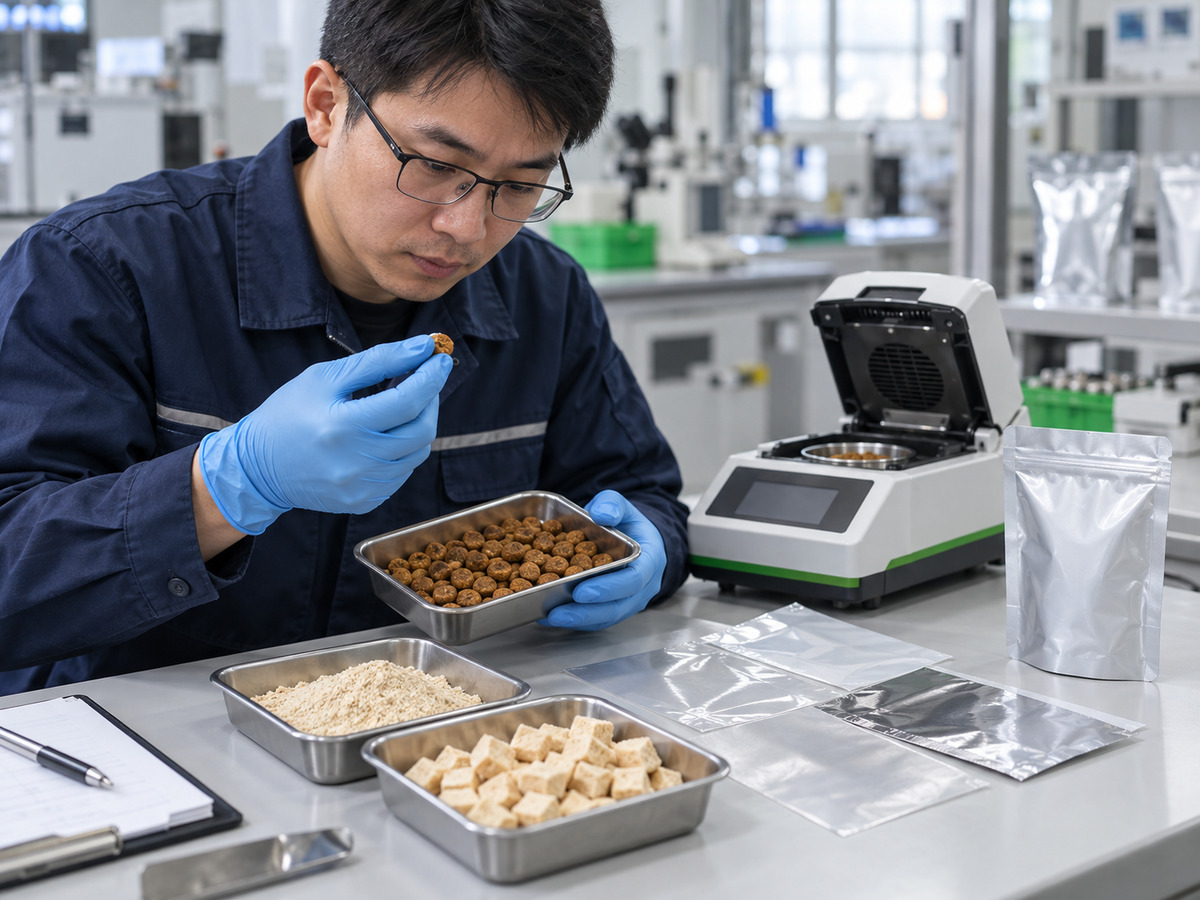
The fat, aroma, powder, sharp particles, moisture and processing methods in pet food will simultaneously change the barrier, sealing, strength and opening/closing design.Normally we will evaluate the effective packaging specification should connect product protection, filling efficiency, transportation risks and consumer use as below,
- Preassess pet food properties – Select barrier materials based on shelflife risk
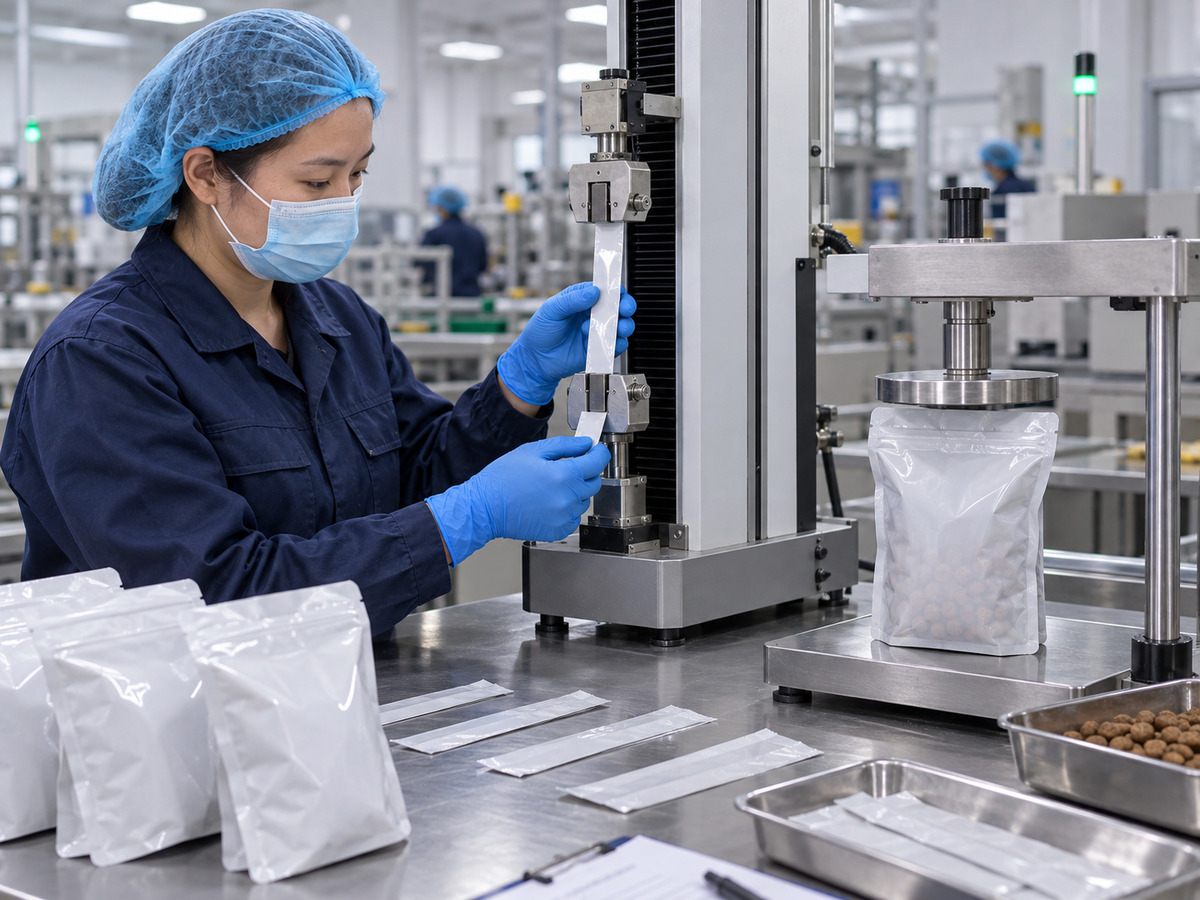
- Seal & weight bearing – Integrate film, bag geometry and heatseal design
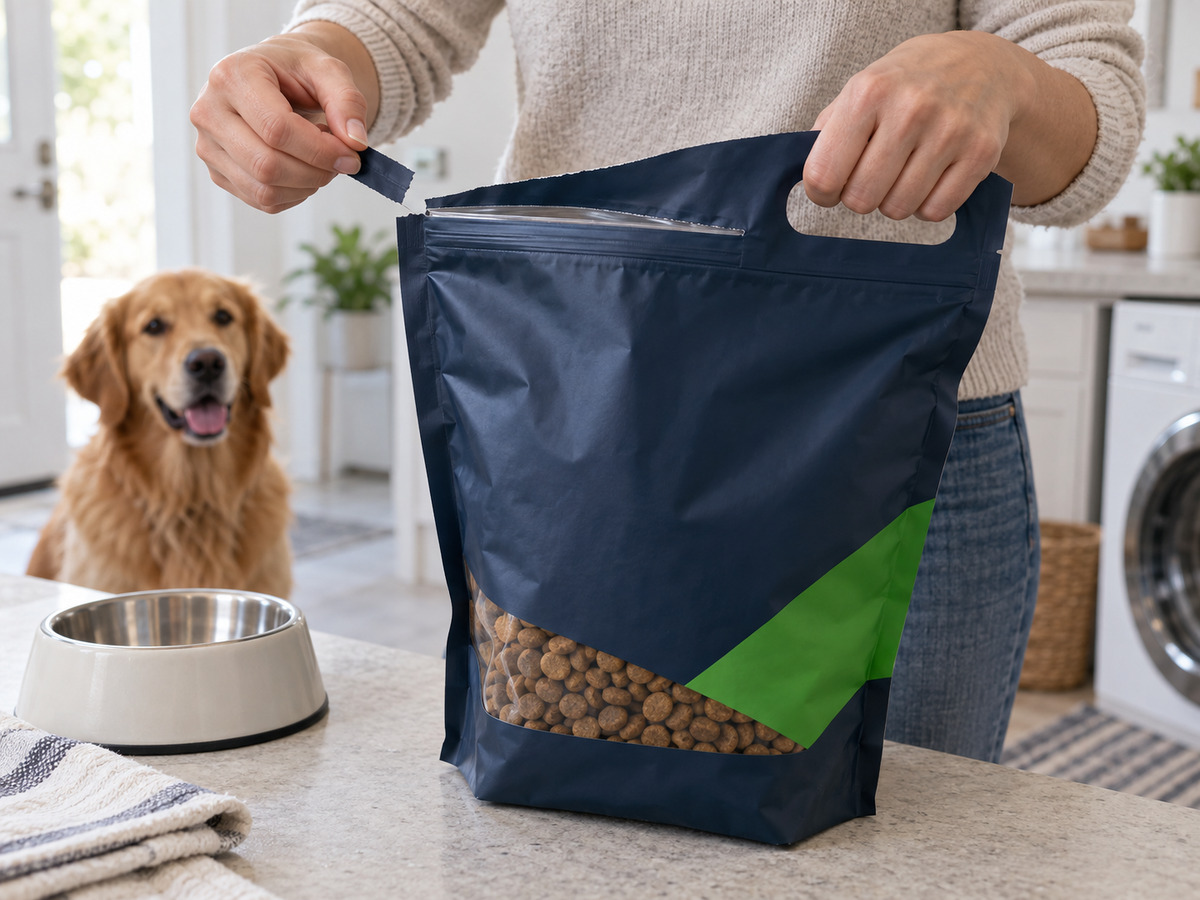
- User experience – Customize easyopen, carry hole and resealable function
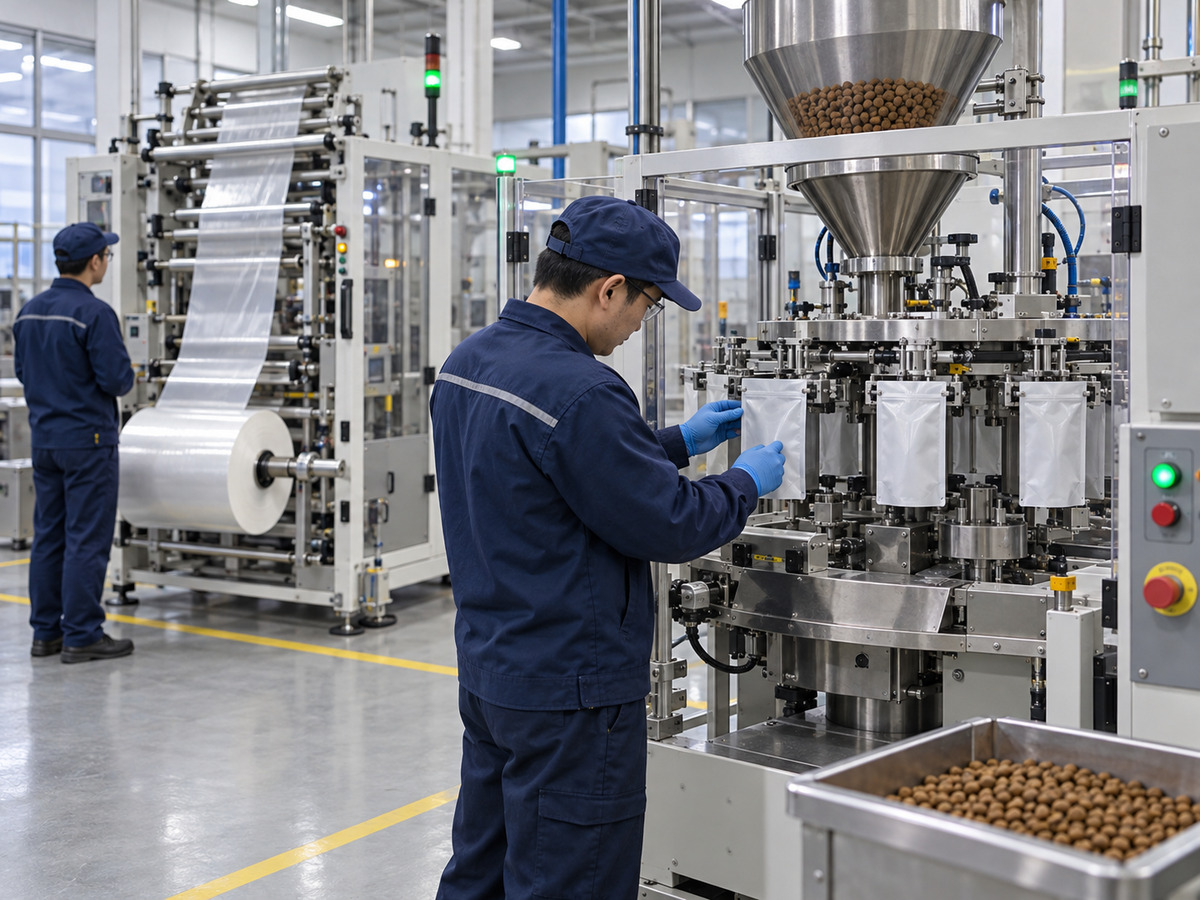
- Filling compatibility – Offer premade pouches or rollstock options
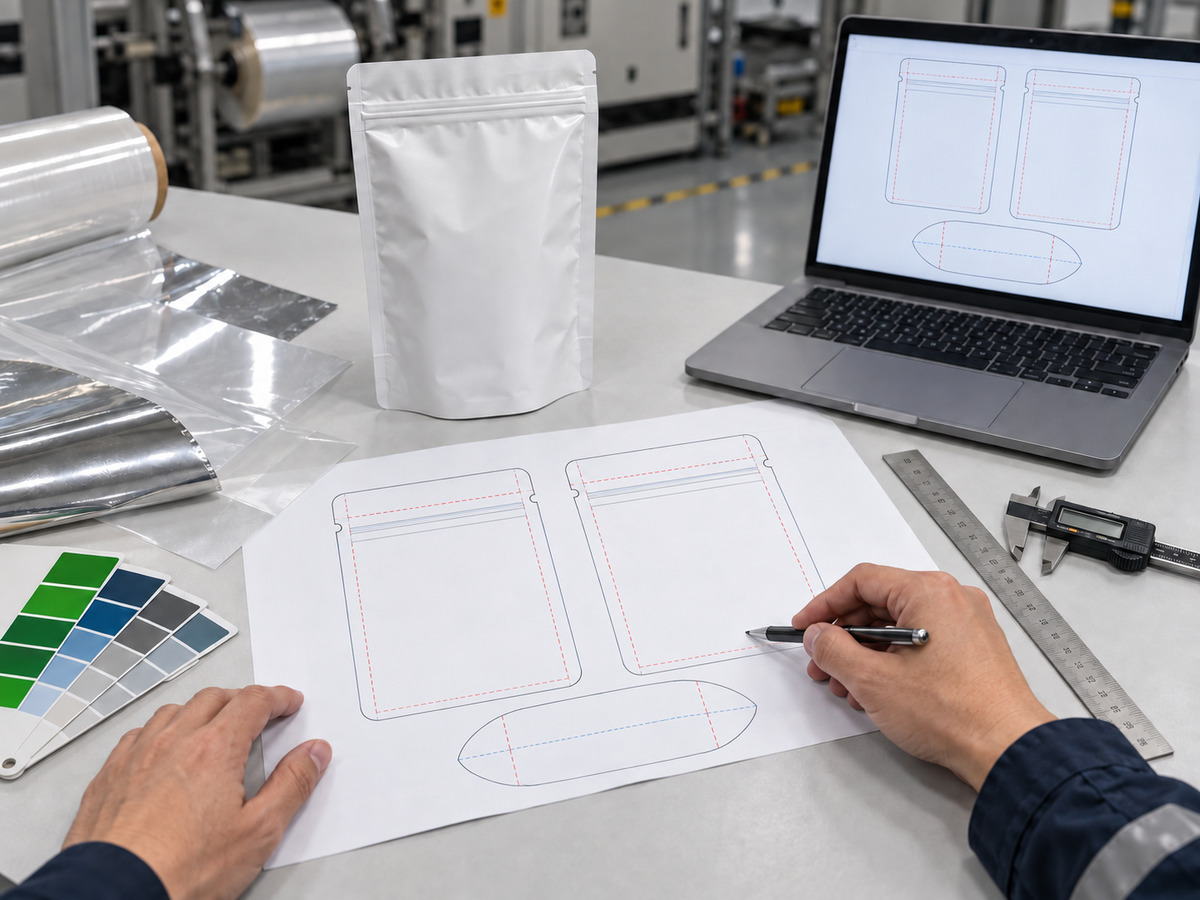
- Print & structure – Confirm bag structure and dieline before artwork
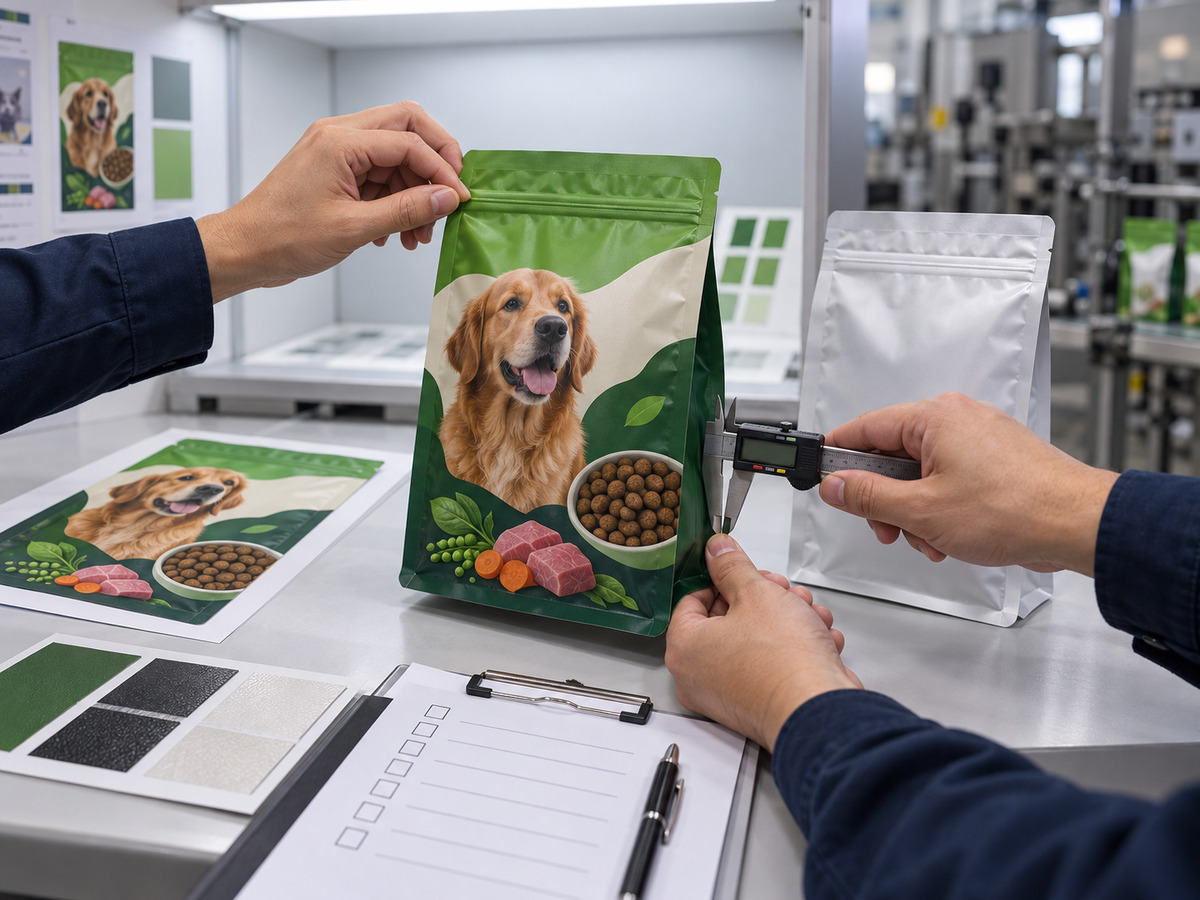
- Sample approval – Verify format and texture with available samples
Custom Pet Food Pouches Manufacturer: From Product Review to Production Approval
MingChu manufactures custom pet food pouches for pet food brands, importers, and packaging buyers. We coordinate product characteristic review, pouch format and material selection, printing, sampling, and production approval, helping you reduce specification errors, filling incompatibility, and distribution damage while creating a clearer and more controllable production route from the start.
Find The Right Pet Food Pouch Type
The following type of pet food pouches support early comparison. The final structure must follow the actual formulation, fill, equipment, market and validation results.
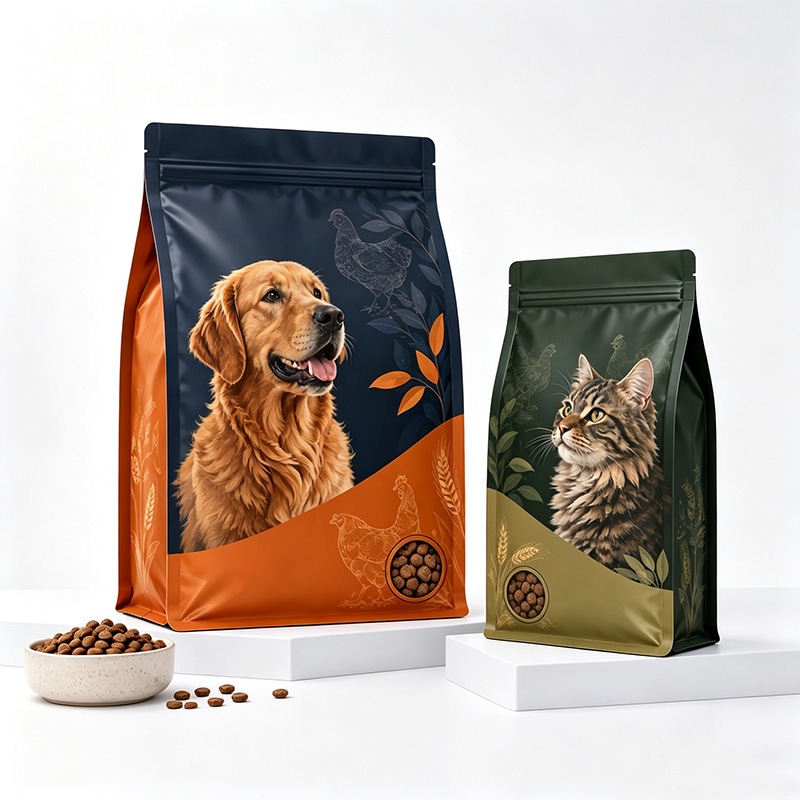
Balances moistureproof, oxygenbarrier, oilresistance, loadbearing and repeated openingclosing performance, suitable for mediumtolargesize dryfood packaging.
Applicable bag type:Stand-Up / Flat-Bottom / Side-Gusset Pouch
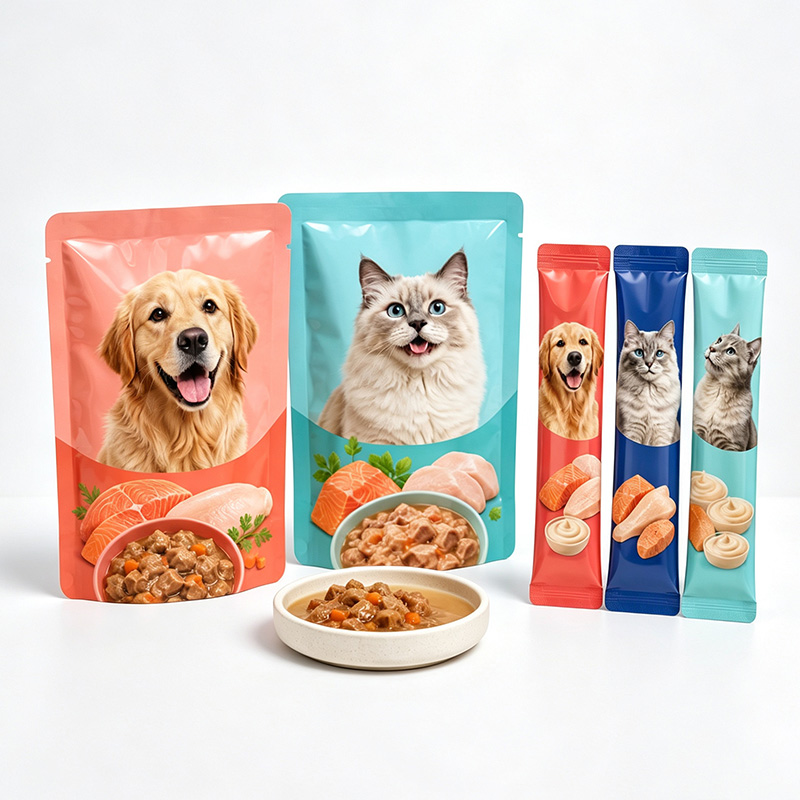
Configure zippers, tear‑notches, or hanging holes according to oil content, aroma, particle shape, and display method.
Applicable bag type: Stand-Up / Three-Side-Seal Pouch
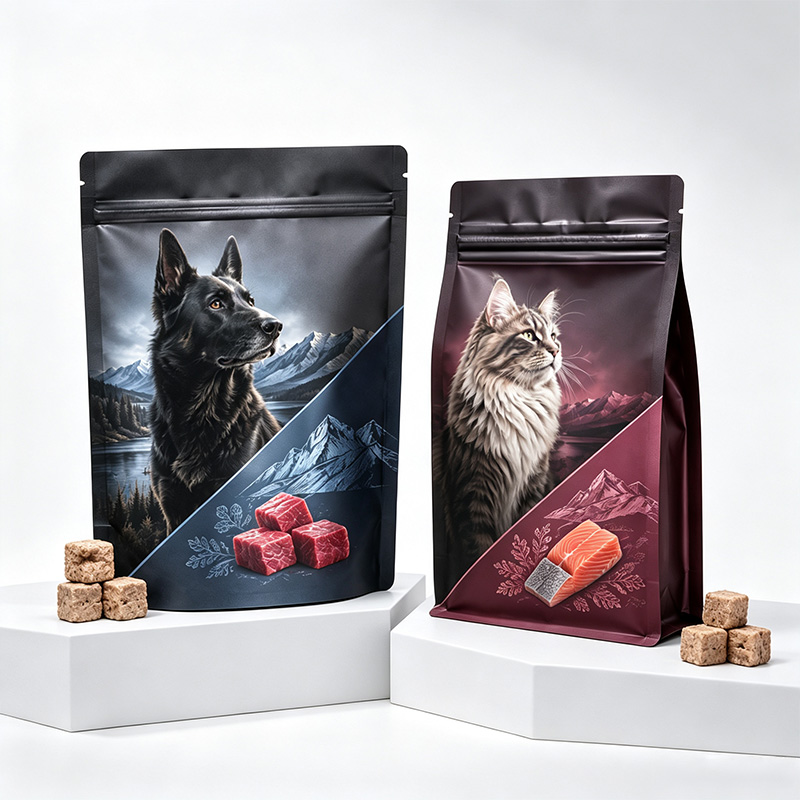
High-barrier films limit moisture and oxygen exposure, with resealable zippers and pouch sizing tailored to fragile freeze-dried pieces.
Type: Stand-Up Zipper Pouches / Flat-Bottom Zipper Pouches
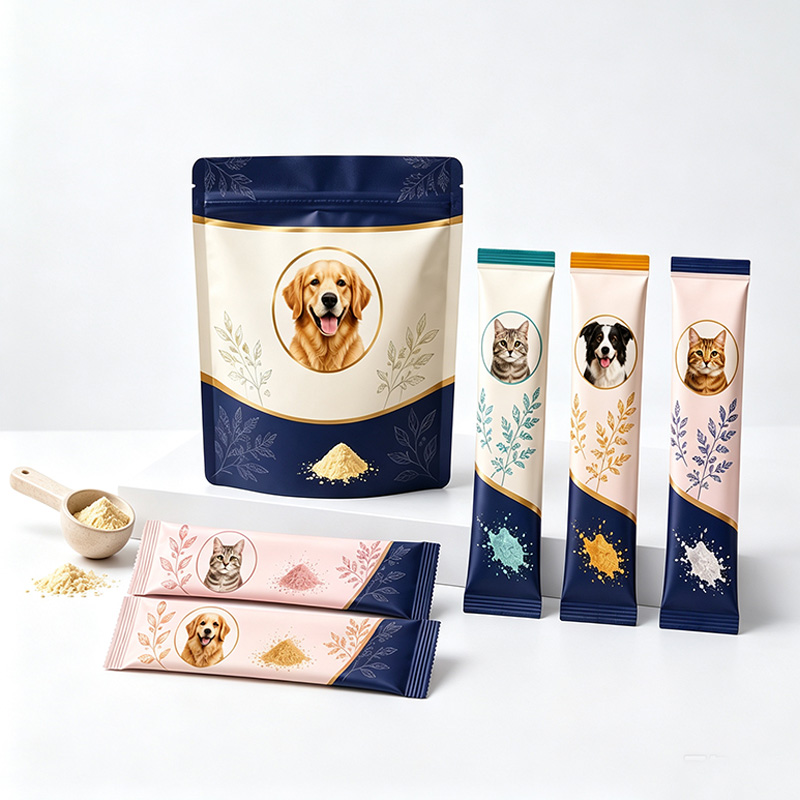
Powders, granules, chews and single-dose products may need moisture and oxygen control, accurate dispensing and control of seal contamination.
Applicable bag type:Stand-Up Pouch / Sachet / Stick Pack
Explore Supplement Pouches

Matches oxygen, moisture, light and aroma protection to shelf-life needs.

Supports grease resistance and aroma retention for oil-rich pet foods.

Balances seal strength with filling conditions and product contamination risks.

Helps against with sharp particles, heavy fills, stacking and transport impacts.

Tear notches or laser scoring simplify opening without extra tools.

Zippers support repeated opening while helping protect the remaining food.

Matches premade pouches or rollstock to equipment and production needs.

Printing, finishes and windows can be configured around brand goals.
Factory Support from Materials and Printing to Bag Making
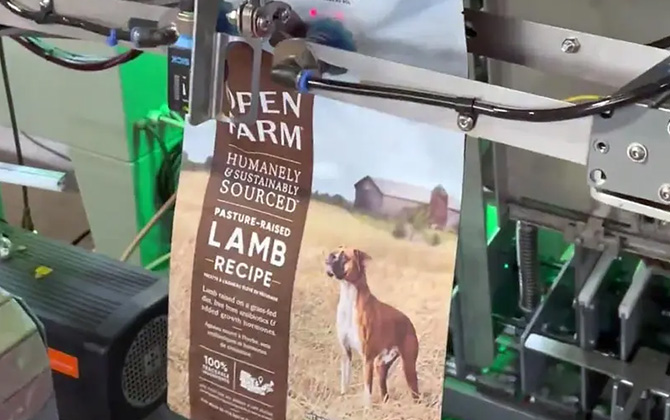
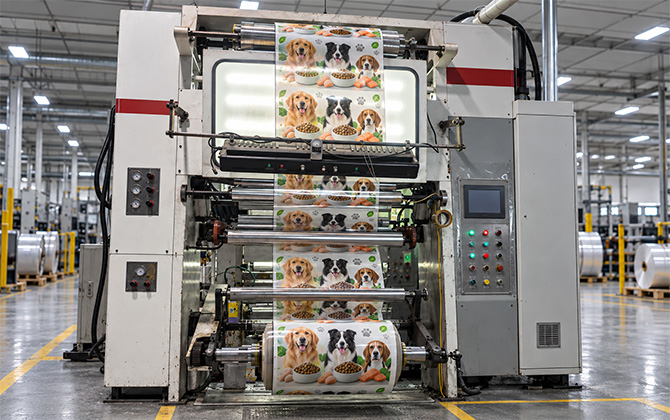
MingChu Packaging describes itself as a custom flexible-packaging manufacturer in Shantou, Guangdong, China, supplying custom printed pouches to businesses of different sizes since 2010.
- Pouch Formats and Supply
Mingchu Packaging supply stand-up, flat-bottom, side-gusset, three-side-seal, zipper, spout and vacuum pouches as well as printed rollstock. - OEM / ODM Customization
Size, material structure, thickness, printing, surface finish and functional features can be discussed by project. Exact capabilities remain subject to final quotation and production confirmation. - Sample Support
Mingchu provide stock, similar or custom samples may be available to review format, material, dimensions, print and sealing performance.
- Choose the Barrier Structure for Pet Food Pouch from Product Risk
- Find a Starting Pet Food Pouch Size by Product Type
- Six Stages to Develop and Approve Custom Pet Food Pouches
Total thickness alone does not define protection. Layer selection, individual thicknesses, lamination quality, pouch seals and test conditions all affect finished performance.
| Application | Main Packaging Risks | Recommended Pouch Structure | What You Need to Tell Us |
| Dry Dog and Cat Food | Oxidation, moisture, grease, sharp kibble, resealing and distribution loads | Stand-up, flat-bottom, side-gusset or quad-seal pouch with barrier selected to the product | Fat level, kibble shape, fill weight, shelf life, zipper or handle and filling method |
| Treats and Chews | Aroma loss, grease, puncture, small portions and display | Stand-up or three-side-seal pouch with easy-open feature and optional zipper or hang hole | Product shape, oil level, portion size, display method and opening pattern |
| Freeze-Dried Food | Moisture pickup, oxidation, fragile pieces and repeated opening | Resealable pouch with validated moisture and oxygen control | Water activity or sensitivity, fill, headspace, desiccant plan and shelf life |
| Supplements and Powders | Moisture, oxygen, dosing, powder in the seal area and repeated opening | Stand-up pouch, sachet or stick pack matched to the dose and filler | Powder behavior, dose size, filling equipment, closure and compatibility requirements |
| Shelf-stable wet food | Thermal processing, seal integrity, migration, delamination and leakage | Retort pouch developed with the food and sterilization process | Formulation, filling and retort conditions, headspace, size, tests and market requirements |
| Frozen or Raw Food | Low-temperature brittleness, puncture, leakage and thawing conditions | Vacuum or barrier pouch using a low-temperature-tough structure | Product form, sharp edges, freeze-thaw cycle, fill and distribution route |
Use this chart to identify suitable starting sizes for sample filling. Final pouch dimensions should be confirmed using the actual product, target weight, filling method, closure position and case-packing requirements.
| Pet Food Type | Reference Fill Weights | Suggested Pouch Formats | Starting Size Reference |
| Pet Treats and Chews | 30–250 g | Three-side-seal, stand-up or flat-bottom pouch | 30–50 g: 90–110 × 140–170 + G30–60 100 g: 110–130 × 180–220 + G40–70 200–250 g: 130–160 × 200–240 + G60–80 |
| Freeze-Dried Pet Food and Treats | 50–250 g | Resealable stand-up or flat-bottom pouch | 50–100 g: 140–180 × 210–270 + G70–100 200–250 g: 180–220 × 270–330 + G80–120 |
| Powdered Pet Supplements | 100–250 g | Stand-up pouch or sachet | 120–160 × 180–260 + G60–80 |
| Dry Pet Food and Kibble | 500 g–10 kg | Stand-up, flat-bottom, quad-seal or side-gusset bag | 500 g: 160–180 × 250–280 + G80–90 1 kg: 180–240 × 280–330 + G90–120 2 kg: 200–250 × 320–370 + G100–130 5 kg: 240–300 × 370–520 + G120–150 10 kg: 370–400 × 680–800 + G100–160 |
| Pet Purée and Lickable Treats | 10–20 g | Stick pack or back-seal sachet | 30–45 × 120–170 |
| Wet Pet Food | 70–400 g | Flat or stand-up retort pouch | 70–85 g: 95–105 × 125–150 100–150 g: 100–140 × 140–210 300–400 g: 150–185 × 230–270 + G40–50 |
| Frozen or Raw Pet Food | 250–500 g | Vacuum or three-side-seal pouch | 160–220 × 230–330 |
Size Note
All dimensions are in millimetres. W × H + G means pouch width × height plus reference gusset depth. These are starting ranges for sample filling, not final production specifications. Final dimensions and dielines must be approved after trial filling.
Each custom pet food pouch step following below step,helping reduce quotation revisions, dieline errors and incorrect assumptions about what a sample has validated.
STEP 01
Requirement Review
Confirm the product, fill, equipment, expired period, target market, quantity, delivery point and unresolved risks.
STEP 02
Format and Structure Recommendation
Narrow the pouch style, dimensions, materials, sealant, features and print route around the product and filling process.
STEP 03
Dieline and Artwork Review
Check bleed, safety areas, seals, zipper, window, barcode, colors, white ink and version control.Will provide layout for approval.
STEP 04
Sample and Filling Check
Use the appropriate sample level to validate dimensions, fill, opening, sealing, line compatibility and print appearance.
STEP 05
Testing and Buyer Approval
Agree on properties, methods, conditions, sampling and acceptance criteria, and record what each sample actually proves.
STEP 06
Production and Repeat-Order Control
Production follows the approved structure, dieline and commercial terms. Repeat orders reference a controlled specification and change process
“We needed a pouch that could handle an oily dry-food formula without feeling greasy on the outside. The samples helped us compare several structures, and the selected flat-bottom pouch ran smoothly on our filling line. The seals and overall finish were consistent with the approved sample.”
 Megan CarterPackaging Manager
“Powder collecting around the zipper had made our previous packs difficult to close. We tested the revised pouch and closure with our supplement blend before approval. The updated format is easier for customers to reseal and works better with the portion size we sell.”
 Layla Al-MansooriSourcing Manager
PET/VMPET/PE is a common starting structure for dry kibble, balancing print ability, barrier performance and heat sealing. High-fat, long-shelf-life or large packs may require additional barrier or toughness.
Yes, a clear window can reduce overall barrier performance when it replaces an opaque high-barrier layer. The effect depends on the window film, its size and position, and the product’s sensitivity to oxygen, moisture and light. For oily, aroma-sensitive or long-shelf-life pet food, confirm the finished pouch through barrier and shelf-life testing rather than judging the window alone.
No. Mono-material pouches can suit some dry kibble, treats and even certain retort applications, but they cannot automatically replace every conventional laminate. Required barrier, heat resistance, puncture strength, sealing conditions, filling equipment and local recycling systems all affect feasibility. The proposed structure should be validated for the actual product and market before any recyclability or performance claim is made.
No. Total thickness is only one factor in puncture resistance. Layer selection, film toughness, lamination quality, seal geometry, pouch folds, product shape and distribution stress can be equally important. A thinner structure with a suitable toughness layer may outperform a thicker but poorly matched laminate, so filled-pouch puncture, drop and transport tests should guide the final specification.