1. Introduction
Choosing the wrong flexible packaging materials can lead to moisture damage, broken bags, or sealing problems. In serious cases, you could even lose an entire batch of products.
In this guide, we’ll walk you through common packaging materials, their properties, and how to choose the right material and structure for your product.
2. Common Flexible Packaging Materials
Flexible packaging is commonly made from plastic films such as PE, PP, and PET, as well as aluminum foil and other functional barrier materials. These materials can be used individually or combined into multilayer structures.
Flexible packaging materials perform different roles. Some are chosen for print quality and product visibility, some provide protection against oxygen and moisture, and others help create reliable heat seals. The table below offers a quick comparison, followed by a closer look at each material and its applications.
2.1 Comparison of Common Flexible Packaging Materials
Swipe horizontally to view the full table.
| Material | Key Properties | Role in Packaging | Main Limitations |
|---|---|---|---|
| BOPP | Good clarity, gloss, stiffness, and moisture resistance | Outer printing layer, product visibility, some single-layer packaging | Limited oxygen barrier; heat-sealable grades must be specified |
| PET | High strength, dimensional stability, good printability | Outer printing layer and mechanical support | Standard PET is not normally heat-sealable |
| PE | Flexible, moisture-resistant, good heat sealing | Single-layer packages and inner sealant layer | Limited oxygen barrier |
| CPP | Clear, flexible, good heat sealing | Inner sealant layer in laminated packages | Limited oxygen barrier; temperature resistance depends on film type |
| PA / NY | Tough, puncture- and impact-resistant | Mechanical protection | Moisture absorption can affect some properties |
| AL | Excellent oxygen, moisture, and light barrier when intact | High-barrier protection | Opaque; susceptible to pinholes or cracks |
| EVOH | Excellent oxygen barrier, transparent | Oxygen-barrier component | Oxygen-barrier performance is sensitive to humidity |
| PVDC | Good oxygen, moisture, and aroma barrier | Combined barrier protection | Chlorine content can create recycling-compatibility concerns |
| VMPET / VMCPP | Barrier properties, light protection, metallic appearance | Barrier layer; certain structures can also provide heat sealing | Performance depends on coating quality and processing |
| PLA | Bio-based; some formulations are industrially compostable | Selected flexible-film applications | Formulation, certification, and end-of-life conditions must be verified |
This table covers base films, functional barrier materials, aluminum foil, and metallized films. These are different material categories and packaging roles, not interchangeable choices.
These are general, qualitative comparisons. Actual performance depends on the specific film grade, thickness, packaging structure, and processing conditions.
2.2 Properties and Applications of Common Materials
BOPP (Biaxially Oriented Polypropylene Film)
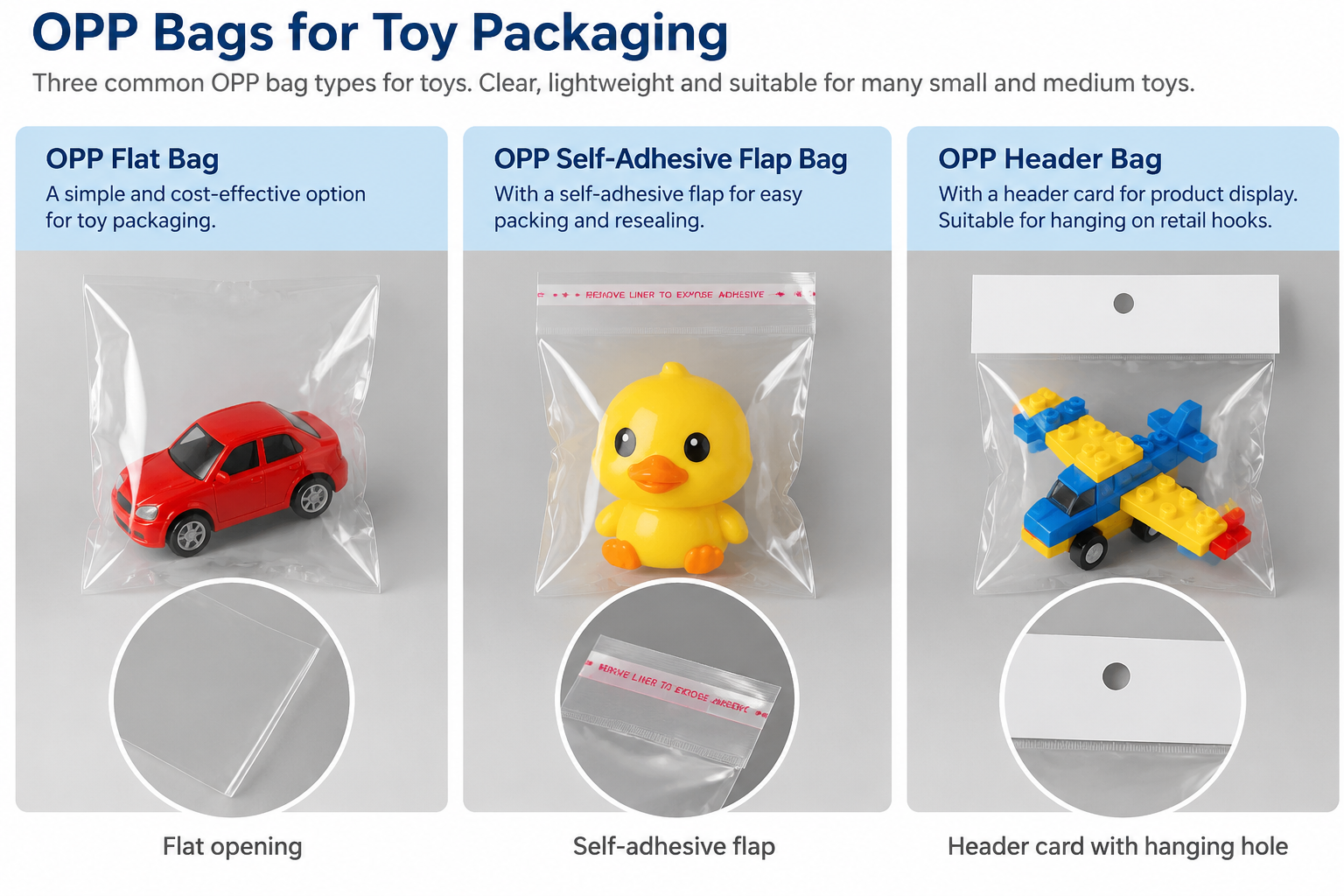
For products that need to be seen through the packaging, appearance can matter as much as protection. BOPP, also often called OPP, offers good clarity, gloss, and stiffness. It is commonly used for toys, candy, biscuits, and household products, and it also works well as an outer printing layer in laminated packaging.
BOPP also offers good moisture resistance, but its oxygen barrier is limited. If the package needs to be heat-sealed, choose a heat-sealable BOPP film or a laminated structure such as BOPP/CPP.
PET (Polyethylene Terephthalate Film)
PET offers good mechanical strength, dimensional stability, and printability. That is why it is frequently used as the outer layer of laminated packaging, providing a suitable printing surface and structural support.
PET is a common choice when print quality and package appearance are important. However, standard PET film is not usually suitable as the heat-sealing layer. It is often laminated with PE or CPP, forming structures such as PET/PE or PET/CPP. If stronger moisture, oxygen, or light protection is required, additional barrier materials may be needed.
PE (Polyethylene Film)
Even a beautifully printed package can fail if its seal is unreliable. One of PE’s most important roles is to provide good heat-sealing performance and help form a secure package seal.
PE is also flexible and offers good moisture resistance. It can be used on its own for certain food, household, and apparel packages, or as the inner layer of laminates such as PET/PE. Its oxygen barrier is limited, however, and heat resistance varies by film type. Oxygen-sensitive products and products requiring high-temperature processing may need a different material or structure.
CPP (Cast Polypropylene Film)
CPP is often paired with BOPP or PET in structures such as BOPP/CPP and PET/CPP. In these laminates, it commonly serves as the inner heat-sealing layer while also providing flexibility and transparency.
Different CPP film types are designed for different processing conditions, and some specialized grades can be used in retort packaging. Standard CPP has limited oxygen-barrier performance, while its sealing and heat resistance vary by type. The right choice depends on the product and packaging process.
PA / NY (Polyamide / Nylon Film)
For products with sharp edges, bones, or shapes that could puncture a bag, puncture resistance becomes especially important. PA offers good toughness, puncture resistance, and impact resistance, making it useful in meat, frozen-food, and vacuum packaging where extra mechanical protection is needed.
A PA/PE laminate, for example, combines the mechanical protection of PA with the heat-sealing properties of PE. However, PA absorbs moisture, and changes in humidity can affect some of its properties. The intended storage and use conditions should therefore be considered.
AL (Aluminum Foil)
Oxygen, moisture, and light can all affect the quality of sensitive products. Aluminum foil is often considered for high-barrier packages such as coffee and milk powder. When intact and free of defects, it provides very strong oxygen, moisture, and light protection.
Aluminum foil is not the right solution for every package. It is opaque, and pinholes or cracks can develop during processing or repeated flexing, reducing the effective barrier. For this reason, foil is normally combined with other materials and evaluated against the package’s conditions of use.
EVOH (Ethylene Vinyl Alcohol Copolymer)
Some products need a strong oxygen barrier without sacrificing visibility. EVOH is one material that can meet this need. It is commonly used as an oxygen-barrier component in multilayer packaging for products such as meat, cheese, and sauces.
EVOH’s oxygen-barrier performance is sensitive to humidity and can drop significantly under high-moisture conditions. It is therefore generally combined with other materials; the performance of EVOH alone does not tell you how the finished package will perform.
PVDC (Polyvinylidene Chloride)
PVDC provides a combination of oxygen, moisture, and aroma-barrier properties. Compared with EVOH, its barrier performance is generally less affected by ambient humidity. PVDC is therefore used in certain food-packaging barrier films and coatings to help limit oxygen and moisture ingress and aroma loss.
However, PVDC is a chlorine-containing material, which can present limitations for some recycling and processing systems. If a product must meet specific environmental or recycling requirements, the complete packaging structure and the rules in the target market should be evaluated.
VMPET / VMCPP (Metallized Films)
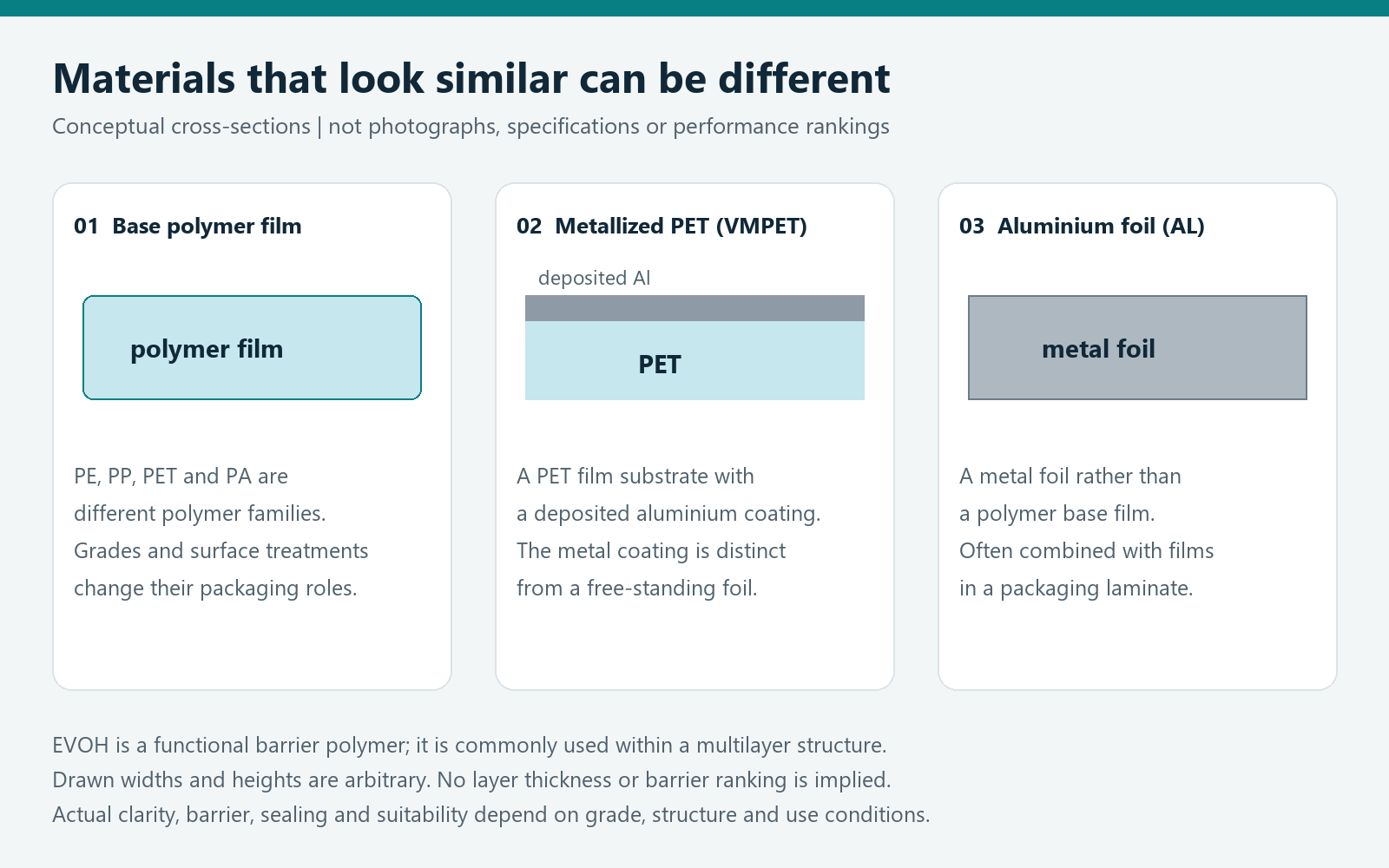
Metallized films are a common option when a package needs a metallic appearance together with some oxygen, moisture, and light protection. VMPET and VMCPP have a very thin aluminum coating deposited onto PET or CPP film. VMPET is often used as a barrier component in laminated packaging, while certain VMCPP films can also serve as a heat-sealing layer.
Metallized films can offer a useful balance between barrier requirements and material cost, but they should not be treated as equivalent to intact aluminum foil. Their protective performance depends on the coating quality, overall structure, and subsequent processing, and should be verified for the intended product.
PLA (Polylactic Acid)
If you are looking for bio-based packaging materials, PLA is one option worth considering. It is a bio-based polyester, and some PLA film types offer good transparency. PLA may also be blended with materials such as PBAT (polybutylene adipate terephthalate) to adjust flexibility and processability, with potential applications in some lightweight packages and disposable cutlery wrappers.
However, being bio-based does not automatically mean a material is compostable. Industrial compostability depends on the formulation, the complete finished package, and the treatment conditions. Any industrial-compostability claim should be supported by the applicable standard and the scope of certification for the finished package, not by the name PLA alone.
3. Single-Layer vs. Multilayer Flexible Packaging Structures
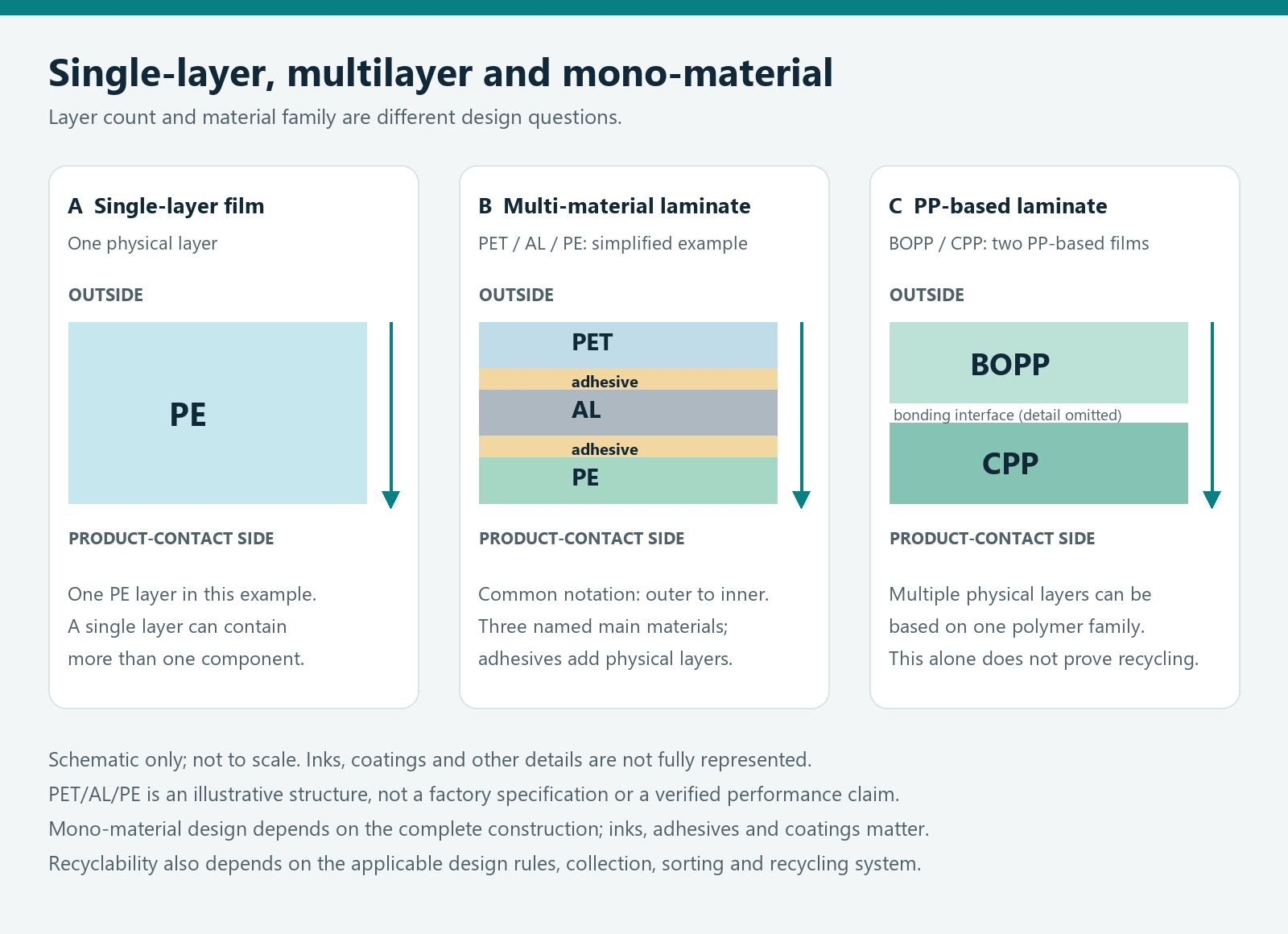
Single-layer packaging typically uses one film material, such as PE or BOPP. It is relatively simple and often more cost-effective for products with modest protection requirements. However, one film may not provide every needed property, so material selection still depends on the product and sealing requirements.
Multilayer packaging combines materials through lamination or coextrusion to meet multiple requirements for printing, protection, and sealing. The roles of materials in a typical packaging structure can be understood in three ways:
Printing layer: Provides a surface for graphics and package appearance.
Functional or barrier layer: Provides oxygen, moisture, light, or other protection.
Sealant layer: Helps create a reliable heat seal.
For example, in a PET/AL/PE structure, PET provides the outer printing surface and mechanical support, AL offers strong oxygen, moisture, and light protection, and PE provides the heat-sealing layer.
Packaging structure notation such as PET/PE or PET/AL/PE is commonly written from the outer side to the product-contact side. Confirm the exact layer order and specifications with your packaging supplier, as the notation alone does not define every component.
When a product needs several types of protection, a suitable multilayer structure may be more effective than simply increasing film thickness.
These are functional roles, not necessarily three separate physical layers. A single material can perform more than one role.
Mono-material refers to a package designed primarily around one polymer family, not necessarily a single physical layer. For example, BOPP/CPP uses PP-based films, while PET/PE combines different polymer families; inks, adhesives, and coatings still matter when assessing recyclability.
4. How to Choose the Right Flexible Packaging Material
4.1 Identify Your Product’s Protection Needs
Start with the product itself and the factors that could affect its quality. Moisture, oxygen, light, puncture risks, and sealing requirements vary from product to product.
For example, chips and biscuits may lose their crispness when exposed to moisture, while some oil-containing foods also need protection against oxidation. Sauces and liquids require attention to leakage prevention, sealing, and compatibility with their contents. Powders such as milk powder and ground coffee need barrier performance suited to their moisture sensitivity and intended shelf life.
Before choosing PET, PE, aluminum foil, or another material, determine what your product needs protection from, then select a material or laminate that provides the relevant properties.
For oxygen- or moisture-sensitive products, OTR (oxygen transmission rate) and WVTR (water vapor transmission rate) indicate how much oxygen or water vapor passes through a material or package under specified test conditions. Evaluate the relevant complete packaging structure and test conditions rather than relying on a material name alone.
4.2 Consider Shelf Life, Storage, and Transport Conditions
How long a product needs to last, and the conditions it will encounter during storage and shipping, can also influence material selection.
For the same product, extending the target shelf life from six months to two years may change the barrier requirements and the most suitable packaging structure. Products stored in hot, humid conditions need careful moisture protection, while frozen products call for flexibility and impact resistance at low temperatures. Long-distance sea freight also introduces compression, rubbing, and handling risks.
Choose a structure that provides sufficient protection for the intended shelf life and distribution environment, rather than automatically specifying the highest barrier or thickest film.
4.3 Check Your Packaging Method and Equipment Requirements
Different packaging methods place different demands on film. Automatic packaging machines often require suitable flatness, coefficient of friction, stiffness, and heat-sealing characteristics to run consistently.
For manual packing, ease of handling and seal reliability depend on the sealing method used. If a product requires hot filling, thermal sterilization, or freezing, the material must also be suitable for those processing conditions.
Material selection should therefore account for both the product and the equipment and process used to pack it.
4.4 Balance Packaging Cost and Target-Market Sustainability Requirements
The most expensive material—or the structure with the most layers—is not automatically the best choice. A suitable package should meet the product’s protection requirements without adding unnecessary cost or performance that the product does not need.
If your products are sold in markets such as Europe or the United States, you should also consider applicable packaging requirements, including recyclability, recycled-content rules, and other relevant regulations.
For food-contact packaging, check requirements applicable to the intended material, food type, and use conditions—for example, relevant U.S. FDA provisions under 21 CFR and, for applicable plastic food-contact materials in the EU, Regulation (EU) No 10/2011. These references do not establish that a particular finished package or factory is certified or compliant.
Recyclable, biodegradable, and industrially compostable describe different properties or end-of-life pathways. The environmental attributes of one component do not establish compliance for the finished package.
4.5 Confirm Performance Before Mass Production
Whether you choose a single-layer or multilayer structure, review samples to confirm appearance, seal quality, and required protection. If you use automatic packaging equipment, conduct a production-line trial before placing a full production order to identify potential compatibility issues.
5. Flexible Packaging Material Choices by Application
Different products have different protection, appearance, and processing requirements. The following examples offer a starting point for identifying potential materials and the questions to resolve before selecting a final structure.
Swipe horizontally to view the full table.
| Application | Main Packaging Needs | Possible Materials / Structures | What to Confirm |
|---|---|---|---|
| Toy packaging | Product visibility, print quality, sealing, transport durability | PE; BOPP; BOPP/CPP; PET/PE; PET/CPP | Toy shape, weight, packing method, and target-market safety requirements |
| Food packaging | Moisture and oxygen protection, freshness, sealing, food-contact safety | BOPP/CPP; PET/PE; PET/VMPET/PE; PET/AL/PE | Sensitivity to oxygen, moisture, and light; shelf life; sterilization and storage conditions |
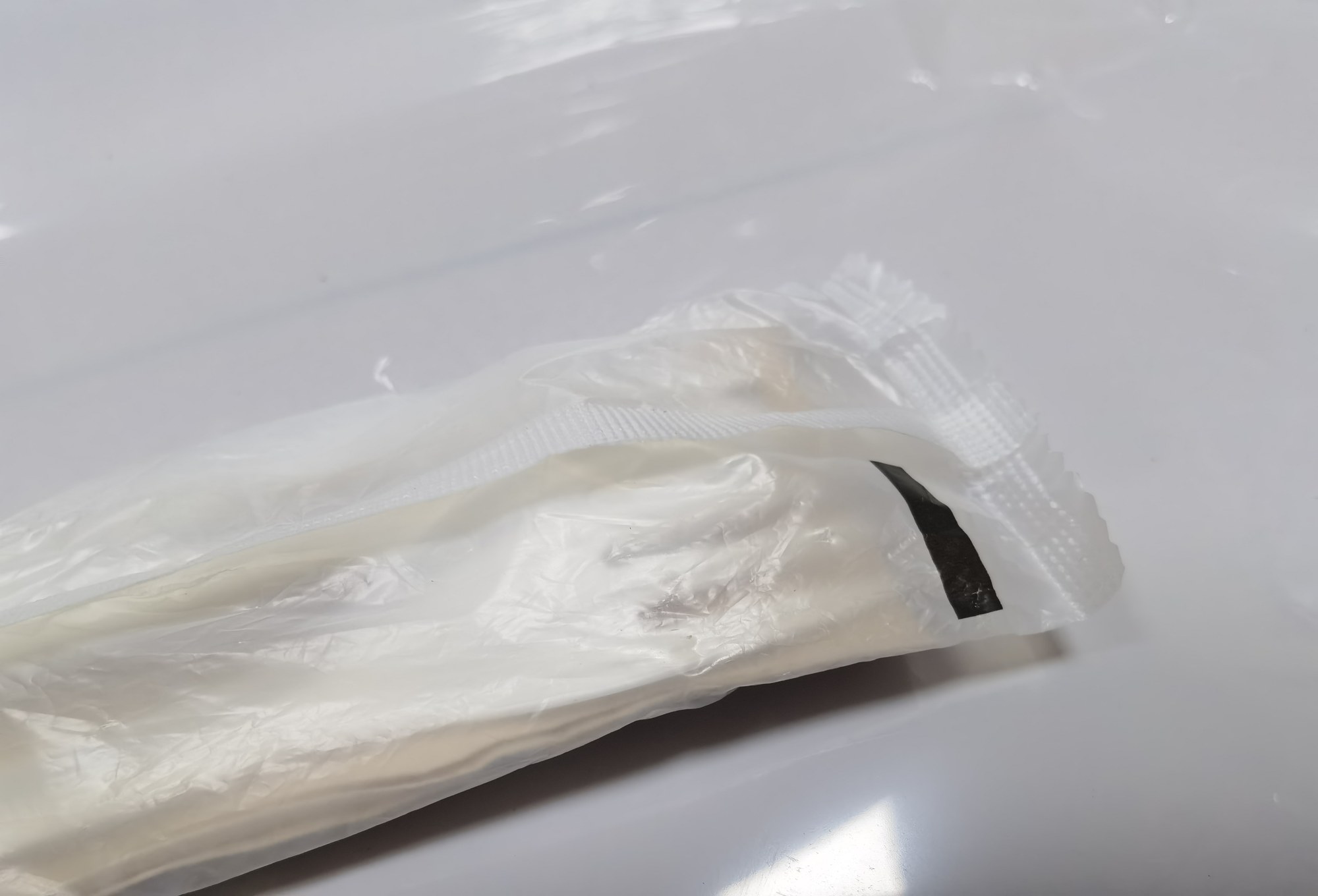
| Disposable cutlery packaging | Hygiene protection, clarity, printing, sealing, machine compatibility | PE; BOPP/CPP; PET/PE; suitable PLA blends | Cutlery shape and sharp edges, equipment compatibility, suitability of materials; verify compostability claims separately |
| Household product packaging | Appearance, sealing, moisture and leak protection, durability | PE; PET/PE; PET/PA/PE | Whether contents are solid, powder, or liquid, and material compatibility |
| Apparel packaging | Dust protection, visibility, flexibility, easy closure | PE; BOPP | Garment size, appearance, self-adhesive closure, ventilation holes, and target-market requirements |
| Industrial product packaging | Puncture and tear resistance, moisture and transport protection | PE; PET/PE; PA/PE | Product weight, sharp edges, distribution conditions, and any corrosion-protection requirements |
These are possible starting points, not fixed specifications for every product in each category. Final material selection should be confirmed against the product, packing method, and actual performance requirements.
6. Frequently Asked Questions
6.1 What Is the Difference Between PET/PE and BOPP/CPP Packaging?
PET/PE and BOPP/CPP are both common two-layer laminated packaging structures, but they can differ in appearance, feel, and performance in use.
PET/PE combines the mechanical strength and dimensional stability of PET with the flexibility and heat-sealing properties of PE. It is worth considering when print quality, package toughness, and seal performance matter.
BOPP/CPP typically provides good clarity, gloss, and a crisp, relatively stiff feel. It works well for products that benefit from visible presentation and shelf appeal, such as candy, toys, and household goods.
There is also a recycling distinction: PET/PE combines two different plastic families and is more difficult to process in conventional recycling streams. Because BOPP and CPP are both PP-based, their combination is more compatible with mono-material PP packaging design. However, adhesives, inks, and local collection and recycling systems still matter.
Actual performance also depends on film thickness, the grades used, and processing conditions.
6.2 What Is the Difference Between Metallized PET and Aluminum Foil Packaging?
Metallized PET (VMPET) has an extremely thin aluminum coating on a PET film, while aluminum foil (AL) is a separate sheet of metallic aluminum. Both can have a silvery appearance, but their properties differ.
VMPET generally offers a lower-cost option with some oxygen, moisture, and light protection. Intact, defect-free aluminum foil typically provides a stronger barrier, making it suitable for sensitive products such as milk powder and coffee. However, repeated flexing may create pinholes or cracks in the foil.
How can you tell them apart? Foil laminates may retain more obvious creases, while metallized films often spring back more readily. This is only a rough clue, though. The most reliable approach is to check the material-structure specification from the supplier.
When laminated with other plastics, both can be more difficult to recycle. The right choice depends on the required barrier performance, cost, and complete packaging structure.
6.3 Does Thicker Flexible Packaging Film Always Provide Better Protection?
Not necessarily. Increasing film thickness may improve some mechanical properties, such as puncture or tear resistance, but it does not improve every protective property to the same degree.
If your product has sharp corners or is relatively heavy, a thicker film may help lower the risk of bag failure. If it is sensitive to oxidation, however, simply adding more PE thickness is generally less effective than choosing an appropriate oxygen-barrier material.
Thicker film may also increase material cost. Choose thickness based on product weight, shape, barrier needs, and the overall packaging structure—not on the assumption that thicker is always better.
6.4 Which Flexible Packaging Materials Are Suitable for Automatic Packaging Machines?
Common structures for automatic packaging include BOPP/CPP, PET/PE, and PET/CPP, as well as certain single-layer PE and BOPP films designed for the application. The best option depends on the machine, product, and sealing method.
Film stiffness, flatness, coefficient of friction, and heat-sealing behavior are also important. An unsuitable coefficient of friction can cause unstable film feeding, while a mismatch between the film and sealing settings may result in weak seals or leaks.
If you use an automatic packaging machine, share the machine type, packing speed, and sealing requirements with your supplier, and test the roll film on the actual machine before mass production.
6.5 Are Mono-Material PE or PP Flexible Packaging Bags Recyclable?
Mono-material PE or PP packaging is generally easier to design for recycling than mixed-plastic laminates such as PET/PE, because it avoids some incompatibilities between different polymer families.
For example, BOPP/CPP has two physical layers, but both are PP-based. That makes it a potential option for mono-material PP packaging design.
However, mono-material does not automatically mean recyclable. Inks, adhesives, coatings, and the availability of local collection and recycling infrastructure all affect whether the finished package can actually be recycled.
If recyclability is a requirement in your target market, check the complete structure and its compatibility with the relevant recycling system, rather than relying on the PE or PP label alone.
6.6 Is PLA Flexible Packaging Recyclable or Compostable?
PLA (polylactic acid) is a bio-based plastic. Some PLA materials and blends can break down under suitable industrial composting conditions, but this does not mean every finished PLA package is industrially compostable.
PLA can also be mechanically recycled when it is properly sorted and processed in a dedicated system. However, it generally should not be mixed into conventional PE, PP, or PET recycling streams.
Industrial composting requires controlled temperature, moisture, and microbial conditions. It does not mean that a package will quickly degrade in the natural environment.
If you need an industrially compostable package, verify that the finished product meets applicable standards such as EN 13432 and that suitable facilities are available in the target market. Certification of a raw material does not automatically certify the final printed or laminated package.
6.7 Which Flexible Packaging Materials Provide Good Oxygen Barrier Protection?
EVOH, PVDC, aluminum foil, and metallized films are common options for oxygen barrier packaging.
Aluminum foil provides very high barrier protection when intact. EVOH offers excellent oxygen resistance while maintaining transparency, but its performance can decrease in high humidity. PVDC provides a combination of oxygen and moisture resistance, while metallized films offer varying levels of protection depending on their structure.
The best choice depends on your product’s sensitivity to oxygen, storage conditions, and packaging requirements.
6.8 Which Flexible Packaging Films Are Heat Sealable?
PE and CPP are commonly used as heat-sealing layers in flexible packaging. Specially designed heat-sealable BOPP films can also be used for certain applications.
PE is often selected for its flexibility and sealing performance, while CPP is commonly paired with BOPP or PET in laminated structures.
However, not all films of the same material seal under identical conditions. The final choice should consider sealing temperature, pressure, dwell time, and compatibility with your packaging equipment.
6.9 What Information Should I Give a Supplier to Choose the Right Flexible Packaging Material?
Start by telling us what you are packaging, its weight, the required package size and packing method, and whether you need protection against moisture, oxygen, light, or punctures.
If shelf life or automatic packaging is important, please also share the storage and shipping conditions, machine type, and sealing requirements. Your target market, expected order quantity, and budget will help us assess suitable material structures.
If you are unsure whether PET, PE, or another material is right, you can send us product photos or a sample of your current packaging. We can help evaluate the options and arrange sample confirmation before mass production.
7. Conclusion
Choosing the right flexible packaging material means balancing product protection, print quality, and cost. With production experience in packaging for toys, food, disposable cutlery, and household products, we can help you select a suitable material structure.
Looking for a packaging solution? Contact us with your product photos, packaging requirements, or existing samples. We can recommend suitable materials and packaging options and provide a quotation.